

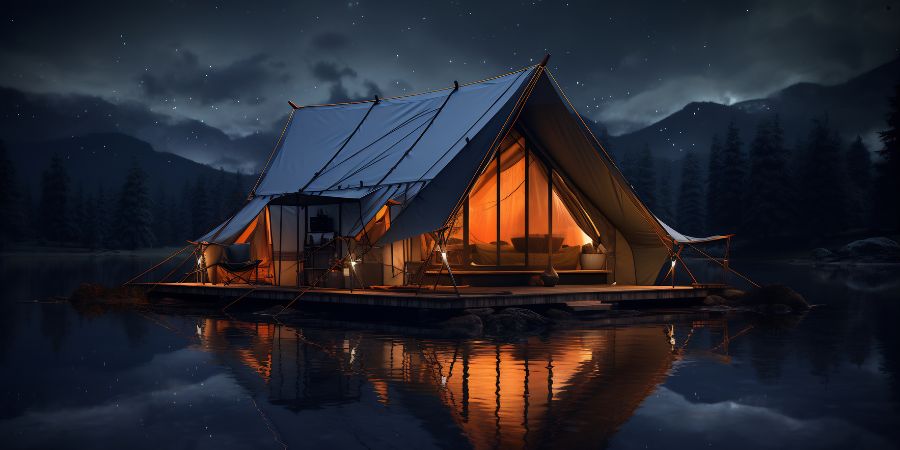
The glamping economy can also be termed as the market that surrounds the concept of “glamorous camping.” The key component of such camping is the fact that tent pitching does not occur at the destination. Glamping services range from tree house accommodation, Safari tents, Eco-lodges, or even domes.
This niche is situated at the intersection between the tourism sector, experiential tourism, and sustainable tourism. This niche meets the needs of those tourists seeking nature escape locations but with accessibility, privacy, and beauty included. Glamping was previously a niche market over the last ten years but is today an organized global sector with organizations and investors.
Why Glamping Has Gotten So Popular Worldwide
A number of structural changes to travel behavior are propelling the glamping market.
There is a growing trend of experiences instead of physical possessions among travelers. There are emotional, mental, and escapist benefits of nature-based tourism. However, glamping meets all of these needs while overcoming the demerits of camping, which are related to equipment, setup, and the absence of amenities.
Flexibility afforded by remote working has also impacted traveling behavior. Now, staying longer in pleasant and quiet destinations has become possible, leading to a demand for suitable outdoor accommodations with proper infrastructure.
Awareness regarding sustainability is another factor. Most glamping centers stress sustainable development, the use of renewable materials, and sustainable use of the land, just like environmentally responsible tourists.
Core Elements of the Glamping Economy
Accommodation Design and Infrastructure
By definition, design is a characteristic of glamping. Units are often architecturally distinctive and purpose-built to blend into natural surroundings. Materials emphasize durability, insulation, and minimal environmental disruption.
The infrastructure demands are lower than those of conventional hotels but more than campsites. Utilities such as water, electricity, heating, and garbage disposal shall be conforming to hospitality functions but possibly adaptable to the situation in far-flung areas.
Location and Land Use
Glamping locations usually exist in rural, beach, desert, forest, or mountain areas. The proximity to nature is core to its offerings.
Land leasing and zoning issues play an important role in site selection. Successful casinos balance seclusion with ease of access.
Guest Experience and Services
The glamping economy is deeply reliant on curated experiences. In addition to accommodation itself, services can be guided outdoor activities, wellness, local food, and cultural immersion.
Services range from luxury self-service to fully hosted stays. Technology enables operations with contactless check-in, digital concierge tools, and dynamic pricing.
Target Demographics Fueling Demand
The glamping market appeals to a broad set of consumers, although certain segments stand out as major contributors
Millennial and Z-hostel customers are image, different, and photogenic. Couples, small groups require romance, rejuvenation getaways. Families are looking at a balance of safety, comfort, and exposure.
Another increasingly popular market is the corporate offsite events and wellness tourism. Glamping sites provide seclusion and quiet necessary for such activities as team building, brainstorming, or mental rejuvenation.
Business Models within Glamping Economy
Independent Operators
A lot of glamping businesses start their lives as owner-operated properties, small in the number of units. They usually depend on direct bookings, strong branding, and local partnerships.
Franchise and Management Models
As the glamping economy matures, branded concepts and management companies are rapidly expanding. In these models, design and operations are standardized across sites, along with the guest experience, but can be tailor-made to site-specific requirements.
Landowner Partnerships
Some of these operators develop their business in concert with private landowners, farms, or estates. This reduced land acquisition costs and diversified rural income streams.
Platform-Based Distribution
It also creates demand through online travel platforms and niche glamping marketplaces. Direct-to-consumer channels are a must for maintaining margins and brand control.
Economic Effects on the Local Communities
The glamping economy is normally a source of employment for people in rural areas that have not been developed.
Partnerships between the hotel and the local suppliers, guides, and artisans will also be useful in retaining the funds within the society. There is the ability to support conservation through eco-glamping.
In other words, despite these challenges, success in the industry also calls for involvement in the social environment, adherence to the law, as well as respect for nature
Sustainability and Environmental Considerations
A sustainable lifestyle is often put forth as an important aspect within the glamping economy, but the reality in practice can be different.
Low-density development lessens the strain on local ecosystems. To further reduce permanent alteration of land, many modular structures can be employed. Water-conserving practices and solar powering are also becoming more common, along with waste-reduction practices.
Credibility counts: Travelers are becoming increasingly discerning about green claims, favoring operators who demonstrate measurable impact rather than marketing language.
Investment Outlook and Market Maturity
From an investment standpoint, the glamping industry provides attractive features. The startup costs are lower compared to the conventional hospitality industry, and the units are easily replicable.
Revenue per Available Unit: This might be higher than conventional campsites, depending on the spot. Seasonality: This effect would remain, although different campsites and non-peak season activities might counter this problem.
There is a growing institutional demand, which symbolizes that the sector is shifting from R&D initiatives towards a conventional asset class.
Challenges in the Glamping Economy
Despite the growth attained in the industry, there are operational and strategic challenges.
Uncertainty related to regulations is regional, with zoning regulation or land use, sometimes not compatible with new forms of accommodation.
Also, operational consistency is a challenge. Difficulties arise when it comes to staffing, maintenance, and inventory issues for remote areas
Market saturation begins in popular holiday spots, leading to a surge in market rivalry.
Future Trends Shaping the Glamping Economy
The next phase of the glamping economy will be about polish, not innovation.
The design innovation would be centered on usability and resiliency in terms of climate factors throughout the year. There would be more emphasis on the integration of wellness, involving structured programs and not just additional offerings.
Technology will drive personalization and efficiency in operation with the experience of escape being untouched.
Destination development, or the use of glamping to complement local tourist development, is an expanding concept.
How Businesses Can Enter the Glamping Economy
Entrepreneurs wanting to venture into this sector should start with market and regulatory analysis, which must be done on a local level. This clearly indicates that local demand factors, seasonality, and competitive factors are highly essential and mandatory in this case.
The key to success involves clear positioning, accurate budget analysis, and execution discipline. Smaller schemes done well are often superior to unclear large schemes.
Glamping is equivalent to diversification for an existing hotel brand, targeting experience-based travelers.
Is the Glamping Economy Built to Last?
The overall trend that is reflected in the glamping industry is related to changes in the manner that people choose to travel and work, and ultimately, in the manner that they use time. The focus on experience, comfort, and nature is long term and not based on short-term trends.
With the increasing standardization and professionalization, the glamping market is very likely to remain a full-fledged sector in the global tourism system.
Frequently Asked Questions
What is the Glamping economy?
Glamping economy-that market which specialises in luxury camping, that is offering hotel-type comfort in the outdoors.
What is the difference between Glamping and camping?
Glamping: Glamping refers to tent holidays with fixed infrastructures and furnishings in the interiors, having all the facilities like bedrooms, bathrooms, and heaters; so, one does not need to have camp equipment.
Is the Glamping Economy Sustainable?
The profitability is location-dependent, occupancy rate, and cost management. The majority of the operators make huge margins considering their premium pricing and low infrastructural costs, relative to hotels.
Who would be considered the average glamping client?
Regular customers may include couples, families, telecommuters, as well as wellness tourists who seek activities that are outside of their comfort zones.
Is glamping an environmentally friendly way of holiday enjoyment?
It could be sustainable, as glamping camps have been developed in environmentally friendly and conservationist operations; though, this may vary depending on the glamping company.