
Every organisation tells two stories at once. One is visible in reports, strategies, and outcomes. The other unfolds quietly in conversations, decisions, and everyday behaviours that shape how people experience their work. It is within this second story that leadership truly operates. It determines whether ambition translates into action, whether pressure builds resilience or disconnects, and whether people feel like contributors or simply participants. The difference is rarely found in systems alone. It lies in how leadership connects intention with reality, shaping environments where direction is clear, and people move forward with purpose.
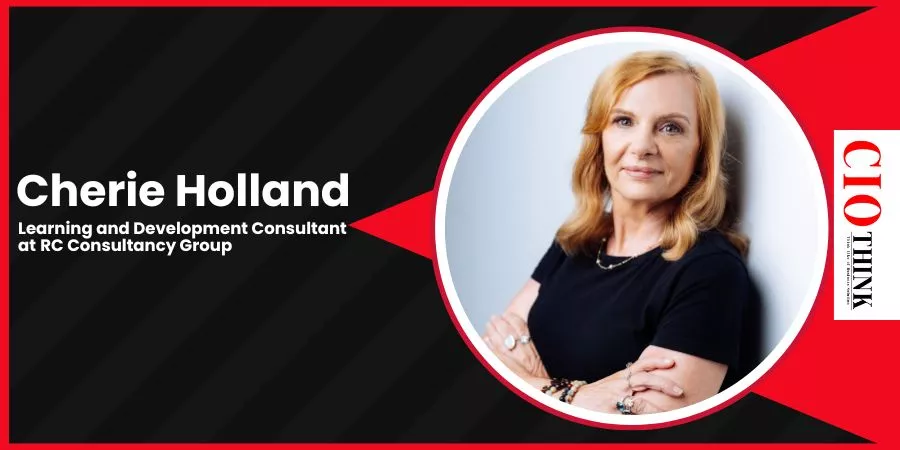
Cherie Holland has built her career in understanding and strengthening that connection. Her work focuses on aligning what organisations aim to achieve with how they actually function through their people, culture, and decisions. Drawing on experience across industries and countries, she brings a perspective that balances structure with insight and performance with human understanding.
A Beginning Shaped by Questions
Some journeys begin with ambition, while others begin with observation. For Cherie, leadership took shape through quiet moments of awareness. Growing up around a family business, she witnessed structure, discipline, and success, yet she also noticed something deeper. Roles were often defined by expectation rather than potential, and leadership seemed reserved for a select few.
This early exposure did not limit her thinking. Instead, it sparked a lasting question about what leadership should truly represent. She began to see that leadership could be more than authority or position. It could be a space where people are seen, where opportunities are expanded, and where influence is measured by impact rather than hierarchy.
Today, Cherie brings this philosophy into practice through her work with RC Consultancy Group, where she partners with organisations, boards, and executive leaders to strengthen leadership capability, organisational performance, and long-term strategy. Her work focuses on aligning people, systems, and purpose, helping organisations navigate change while building cultures that are both high performing and deeply human.
Discovering the Human Core of Leadership
As her experiences widened, so did her understanding of leadership. Through interactions with accomplished professionals and exposure to diverse business environments, she recognised that strategy alone does not define success. The real strength of any organisation lies in its people.
She observed how decisions shaped not only outcomes but also relationships, culture, and trust. Leadership, in her view, became less about directing and more about understanding. It required a sensitivity to how people think, respond, and grow within a system. This realisation guided her toward leadership and organisational development, where she could focus on creating environments that support both performance and personal growth.
Workplaces as Communities of Growth
One of the defining elements of her philosophy is the belief that workplaces are living communities. They are not simply structures designed for productivity, but spaces where individuals come together to contribute, learn, and evolve.
She often reflects on the idea that people belong to two families. One is personal, rooted in upbringing and identity. The other is professional, formed through shared goals and daily collaboration. Both deserve care, structure, and respect. This perspective influences how she approaches leadership, ensuring that organisations are built with both accountability and humanity at their core.
Learning Across Borders and Cultures
Her work across multiple countries and industries added a new dimension to her leadership approach. Exposure to different cultural contexts revealed that leadership is not universal. It is shaped by local values, behaviours, and expectations.
This understanding led her to prioritise listening and observation before action. Rather than applying a single model, she adapted her approach to reflect the realities of each environment. Collaboration became central to her work, allowing her to co-create solutions with those who understood their context best.
Through this experience, she developed a strong foundation in cultural awareness, recognising it as essential for building trust and achieving sustainable results.
Choosing Ethics When It Matters Most
Leadership is often defined in moments of pressure. During a challenging period in the manufacturing sector, she faced a decision that would test her values. While many organisations chose to reduce their workforce to manage costs, she took a different path.
Her focus remained on protecting the people who formed the backbone of the organisation. This decision required careful planning and carried significant risk, yet it reflected her belief that leadership is about responsibility as much as results.
As conditions improved, the organisation was able to respond quickly to new opportunities, supported by a skilled and committed team. The experience reinforced her conviction that ethical decisions can strengthen both culture and performance, creating outcomes that extend beyond immediate gains.
Innovation Grounded in Reality
For Cherie, innovation is not driven by trends or abstract ideas. It emerges from real challenges and the need to find practical solutions. She sees constraints not as limitations, but as opportunities to think differently and act with clarity.
In one instance, she worked with her team to address operational challenges in a new market where traditional methods would not succeed. By rethinking processes and leveraging technology, they developed a solution that significantly improved performance and efficiency.
This approach highlights her ability to combine strategic thinking with practical execution. Innovation, in her view, holds value only when it delivers meaningful and measurable results.
Trust as the Foundation of Leadership
Trust is a central pillar of her leadership style. She understands that it cannot be assumed or demanded. It must be built over time through consistent actions and transparent communication.
By aligning her decisions with her values and ensuring clarity in how those decisions are made, she creates an environment where people feel secure and engaged. This foundation of trust supports collaboration, encourages contribution, and strengthens organisational resilience.
Change That Brings People Along
Change is an inevitable part of growth, yet it can also create uncertainty. Cherie approaches transformation with a balance of structure and empathy. She recognises that while processes and strategies are important, the human experience of change must also be acknowledged.
Through clear communication, support, and a focus on inclusion, she ensures that change becomes a shared journey rather than a disruptive event. This approach allows organisations to evolve while maintaining trust and cohesion.
Resilience Through Purposeful Thinking
Her response to uncertainty reflects a mindset rooted in curiosity and intention. Rather than focusing solely on risk, she looks for insight within challenging situations. This perspective allows her to identify opportunities for improvement and adapt with purpose.
Resilience, for her, is not simply about enduring difficulty. It is about learning from it and using that knowledge to create stronger, more relevant outcomes.
Bridging Industries with Consistent Values
Her ability to work across different sectors demonstrates a balance between adaptability and consistency. Each industry brings its own dynamics, yet her core principles remain unchanged. Clarity, accountability, and respect guide her approach regardless of context.
By adjusting her methods while maintaining her values, she is able to lead effectively in diverse environments, bringing fresh perspectives without compromising integrity. Cherie Holland’s approach demonstrates how purpose, empathy, and collaboration can shape leadership that creates lasting impact, much like the female changemakers shaping industries and inspiring global transformation today.
Designing Leadership for Others to Follow
At a defining stage in her career, her focus expanded from leading organisations to shaping how leadership itself is understood and practised. She developed a structured framework that reflects her experience and provides guidance for leaders across different contexts.
This work represents a shift toward influencing systems at a broader level. It requires a commitment to consistency, ensuring that the principles she promotes are reflected in her own actions. Effective leadership goes beyond achieving business targets; it also shapes how people collaborate, communicate, and contribute to an organization’s culture. Harvard Business Review’s leadership insights offer broader perspectives on these people-centered approaches to leadership.
The Human Side of Sustainable Growth
A key strength of her leadership lies in her ability to integrate financial discipline with a focus on people. She views these elements as interconnected, each supporting the other.
When individuals understand the purpose behind decisions and feel valued within the organisation, performance improves naturally. This alignment creates a foundation for sustainable growth and long term success.
A Legacy Written in People and Purpose
As she reflects on her journey, her vision for the future remains grounded in impact. Leadership, in her view, is ultimately about what is left behind. It is about the people who grow, the environments that endure, and the values that continue to guide organisations beyond any single leader.
Cherie Holland’s work stands as a thoughtful example of leadership shaped by purpose, guided by integrity, and driven by a genuine commitment to helping others succeed. Her journey continues to influence not only organisations, but also the broader understanding of what leadership can and should be.