
Silicon has carried human ambition for more than half a century. Through lattices etched at a microscopic scale, it has powered revolutions, built digital empires, and compressed continents into devices that fit in the palm of a hand. Yet deep inside fabrication plants and hyperscale data centers, a quiet threshold is approaching. Transistors shrink toward atomic boundaries. Heat accumulates. Energy demands surge as artificial intelligence grows ever more computationally hungry. The architecture that once seemed infinitely scalable now strains against physical law. Engineers are no longer asking how to make circuits smaller, but whether electrons themselves are reaching their practical limit. At the frontier of research, attention turns to a different carrier of information. Not current, but light. Not incremental refinement, but a structural shift in how computation itself is performed.
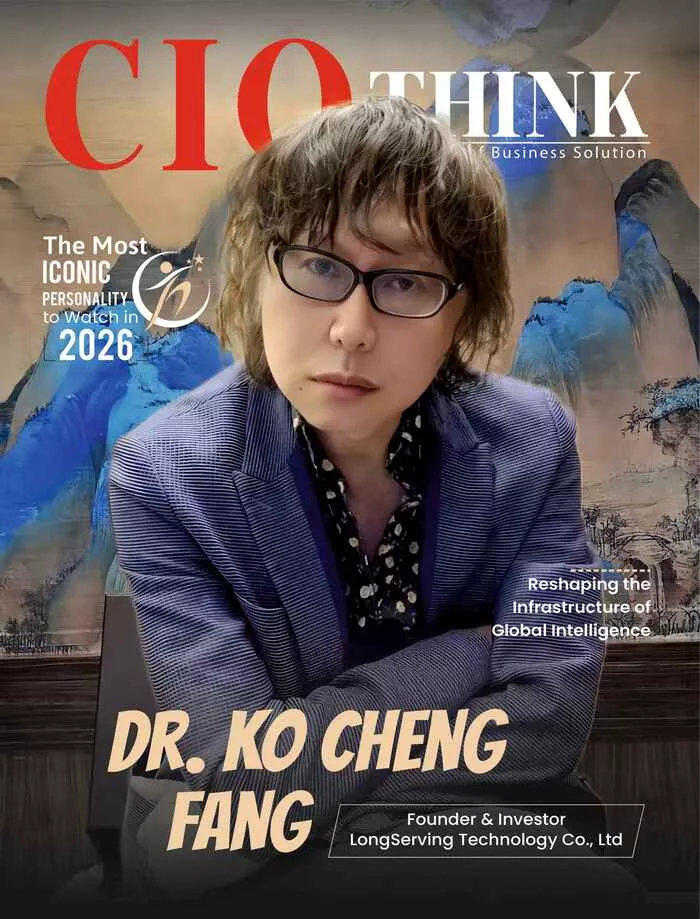
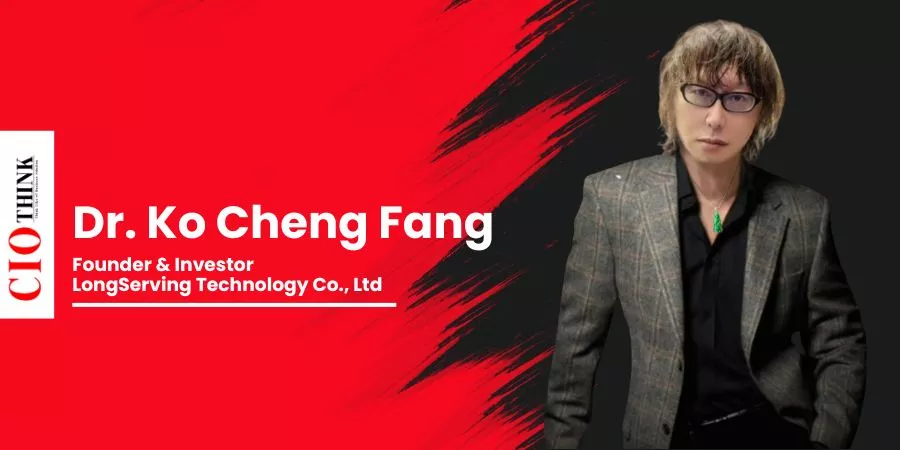
Dr. Ko Cheng Fang has chosen to work precisely at that fault line between electrons and photons. As founder of LongServing Technology, he is developing nanoscale photonic quantum materials intended to translate computation from electrical flow into controlled light pathways.
Passion as the Engine of the Impossible
For Dr. Fang, passion is not a decorative word. It is the very essence of work. He believes that true innovation begins where comfort ends. While many people work out of necessity and reserve joy for leisure, Dr. Fang finds fulfillment within struggle itself. In his view, the early stages of meaningful work are often painful. Yet if one endures, the result becomes profoundly sweet.
When Dr. Fang began attempting to create jadeite in the laboratory, he faced what seemed like insurmountable barriers. Towering before him were two global technological powers, General Electric in the United States and the Changchun laboratory in China. There was no roadmap, no precedent, and no success story to imitate. The endeavor felt almost synonymous with impossible.
Without passion, he acknowledges, most would have dismissed him as unrealistic. After thousands, sometimes tens of thousands, of failed experiments, a single success might appear. To observers, that success looked accidental. After all, even tens of thousands of tons of jadeite ore may not yield one carat of Imperial Green. But to Dr. Fang, perseverance transformed probability into possibility.
His love for jadeite is deeply historical and cultural. The gemstone was treasured by the Qing royal court and adored by Empress Dowager Cixi. The legendary Jadeite Cabbage displayed at the National Palace Museum in Taipei remains one of the most celebrated artifacts in Chinese history, a masterpiece Dr. Fang now aspires to recreate through modern laboratory innovation.
The same relentless passion drives Dr. Fang’s technological pursuits. In developing photonic quantum chips and the 2 nanometer X Photon material, he embraces hardship rather than avoiding it. He believes comfort is fleeting and only purpose endures. For Dr. Fang, surpassing the limits of electronic chips is not merely a technical ambition. It is a moral imperative.
Even as chips shrink to 2 nanometers or 1.6 nanometers, energy consumption rises dramatically, increasing dependence on fossil fuels and carbon emissions. Not every nation possesses advanced clean energy infrastructure, yet every nation requires AI capability to remain competitive. In Dr. Fang’s view, inventing photonic quantum chips is no longer a personal mission but a global responsibility, one that could shape technological civilization for centuries to come.
The Artist’s Mind Behind the Scientist
Dr. Fang has always considered himself an artist first. Beginning at the age of eight or nine, he immersed himself in traditional Chinese bird and flower brush painting before expanding into Western watercolor and oil painting. His childhood home included a private studio, plaster casts of Venus and Michelangelo’s David, shelves filled with books on master painters, and the lingering scent of mineral oil in the air. Art was not a hobby. It was an atmosphere.
Sculpture, in particular, shaped his worldview. Dr. Fang sees life itself as a sculpture, transforming rough stone into refined form. The process requires subtraction, cutting away excess, smoothing imperfections, and shaping with patience and discipline. This philosophy of refinement deeply informs his scientific and managerial approach.
Progress, he believes, is rarely linear. It unfolds through repeated experimentation. Ninety-nine failures may lead to one success. With experience, those failures diminish, perhaps ten next time, eventually only one. Dr. Fang applies this principle of subtraction not only to research but to strategic decision-making and life planning. He eliminates what does not work and preserves what does.
In his technological research, Dr. Fang replicates the logic of artistic creation. Just as an artist refines a canvas layer by layer, he refines materials and methods through disciplined iteration. For Dr. Fang, art and science are not separate domains. They are parallel expressions of the same creative intelligence.
Capturing Light, A Turning Point for Humanity
Dr. Fang often describes himself as a firefighter, entering crises before the team is assembled. In his view, humanity now stands at such a crossroads. As artificial intelligence accelerates, electronic chips are approaching their computational limits. Without a breakthrough, societies must continue building massive data centers, each consuming energy comparable to a small town.
In Taiwan, coal and gas-fired power plants have expanded to sustain advanced semiconductor manufacturing, even as nuclear power is phased out. A 2 nanometer fabrication facility can consume electricity equivalent to an entire region’s residential demand. Solar panels increasingly cover reservoirs, yet the question remains whether supply can truly keep pace without environmental compromise.
For Dr. Fang, the answer lies in light.
Light is the fastest transmission medium known. Photonic computation could potentially deliver performance thousands of times greater than electronic chips while consuming a fraction of the energy. The challenge, however, lies in wavelength. Silicon photonics operates at 1300 to 1500 nanometers. Quantum dots range between roughly 300 and 800 nanometers. Modern chip circuitry measures around 14 nanometers. Achieving compatibility demands extremely short wavelengths approaching the X ray scale, once considered nearly impossible.
Through nanomaterials research, Dr. Fang developed a photosensitive material within the 2 to 3 nanometer range. Using semiconductor laser components, photons transmit across successive material media, passing like a torch and propagating quasi X ray short waves. When tested through Raman spectroscopy and X ray diffraction, the results revealed no existing spectral match. A new material had emerged.
This breakthrough marked a defining realization for Dr. Fang. Humanity could capture and control photonic quanta for computation.
By constructing a semi-photoresist barrier, Dr. Fang designed a photonic gate. When a photon is blocked, the data reads zero. When it penetrates, the data reads one. Data access occurs through photoelectric conversion, conceptually similar to silicon photonics but radically more efficient. Patent protection has been secured across twenty-six major semiconductor manufacturing nations, including the United States and the European Union.
Today, Dr. Fang is assembling what he calls a rescue team, inviting semiconductor manufacturers worldwide to adapt existing fabrication processes into photonic architectures. Whether applied to automotive chips, advanced AI processors, or hyperscale data centers, Dr. Fang envisions photonic quantum chips dramatically reducing energy consumption, cost, and cooling requirements.
For Dr. Fang, this is more than technological evolution. It is a turning point, a global effort to redefine computing, reduce environmental strain, and guide the next era of human civilization through the power of light.
A Vision Born from Frontier Challenges
Dr. Fang founded LongServing Technology with a clear ambition: to develop frontier technologies capable of leading the world rather than following it. From the outset, he focused on challenges that many now consider ordinary but that once required bold imagination, including smartphone encryption and cloud-based data systems that enable seamless global connectivity.
His vision extended beyond digital systems. When Myanmar imposed large-scale mining bans on imperial green jadeite, Dr. Fang led LongServing to successfully recreate the rare gemstone in the laboratory, transforming scarcity into scientific achievement.
When cancer emerged as one of the defining diseases of the century, Dr. Fang directed immediate research efforts toward therapeutic innovation. Using organic essential oils validated under dozens of European Union testing standards, his team extracts bioactive plant compounds capable of inhibiting and destroying cancer cells. Laboratory data already demonstrate effective elimination, including highly aggressive lung cancer cells.
Looking ahead, Dr. Fang plans to enhance efficacy through material modification and nanotechnology to improve cellular penetration. The long-term strategy involves probe-based injection directly into tumor cells to suppress growth and prevent metastasis without invasive surgery.
All research and development to date has been funded entirely by Dr. Fang’s personal capital. Now, he is actively seeking additional partners, equipment, and global collaborators to accelerate progress in confronting this century’s disease.
A Mission for the Age of Intelligent Systems
Dr. Fang views LongServing’s mission within the broader context of the AI transformation reshaping humanity. While AI-driven robotics offers a glimpse of the future, he believes current systems remain in an early developmental stage. The replacement of human labor by intelligent machines is foreseeable but not immediate. Despite high profile demonstrations from major technology companies, most robotics applications remain industrial and limited. Complex deployment in rescue operations and the full realization of autonomous driving still face technical constraints.
At the center of these limitations lies computing power. Semiconductor manufacturing is approaching its physical boundaries. Dr. Fang’s response is to build beyond those limits through photonic quantum chips capable of accelerating computation by more than one thousand times. Materials science validation has already been achieved in LongServing’s laboratories. The next step involves market positioning and leveraging existing foundry capacity for scalable production.
Dr. Fang believes this generation will mark the emergence of photonic quantum robotics. Intelligent machines will evolve into networked, collaborative systems that move beyond factories into every dimension of society. In his vision, robots function not as isolated tools but as coordinated teams connected through distributed networks. From manufacturing plants to construction sites, robotic systems will assume increasingly complex labor roles. Eventually, multiple service robots within a single household will become commonplace.
For Dr. Fang, this technology is not incremental progress. It represents a replication of the future into the present, a deliberate acceleration of civilization’s next stage.
Investing in Innovation with Strategic Patience
As both founder and investor, Dr. Fang approaches innovation with disciplined rationality. He believes public attention has no intrinsic value. Science, in his view, is a structured investment, and every investment must be managed within rational limits.
He acknowledges that human society has established a functional pathway from research and development to capital markets. Early research is supported by foundations and institutional funding. Published results attract venture capital. Public listing allows broader participation, and equity-based growth enables responsible scaling.
Within LongServing, Dr. Fang emphasizes budget control, strategic outsourcing, partnership expansion, and timely engagement with capital markets. These steps, he believes, ensure that the company advances steadily rather than chasing temporary visibility.
Innovation Beyond Conventional Boundaries
Dr. Fang distinguishes LongServing’s approach from traditional technology models. Conventional innovation often proceeds cautiously, minimizing risk and advancing incrementally under commercial pressure. In finance-driven systems, minimizing uncertainty is paramount. While he respects this logic, he believes it can obscure transformative shifts.
For Dr. Fang, technology represents an expression of higher civilization. Rather than slowly exploring unknown territory, he seeks to transplant future frameworks directly into present reality.
He envisions breakthroughs that transcend conventional propulsion systems and aerodynamic constraints. By harnessing magnetic fields and altering magnetic force lines through controlled nuclear energy, he believes interstellar travel could move beyond rocket-based limitations.
Through deep meditation and expanded states of awareness, Dr. Fang describes accessing insights that led to unexpected inventions, including interconnected cloud systems, distributed computing architectures, and real-time data return mechanisms. These concepts resemble an advanced machine ecosystem governed by a central intelligence coordinating cooperative robotics. Autonomous vehicles managing traffic flow naturally emerge from such architecture.
At a time when computing remained dominated by standalone databases, these frameworks had not yet entered mainstream discourse. Dr. Fang introduced them directly, filing patents that attracted attention from the United States Department of Homeland Security. From his perspective, this was not incremental exploration but the leadership of a future paradigm brought into the human world.
Science, Creativity, and Purpose-Driven Innovation
Dr. Fang defines meaningful innovation as breakthroughs capable of reshaping human history. He reflects on pivotal transitions, such as the Industrial Revolution, which replaced animal power with steam engines; the rise of aviation, which enabled transcontinental travel; and the invention of computers, which launched the digital age. The AI revolution now signals another transformation.
Looking ahead, Dr. Fang identifies the coming era as one governed by photonic quantum systems. He believes scientists and inventors serve as pillars carrying human civilization forward. For him, responsible innovation means contributing to technologies that expand human potential while sustaining planetary balance.
Navigating the Transition from Electronics to Photonics
In high-impact decision-making, Dr. Fang emphasizes the importance of accurate situational judgment. During the transitional period between electronic and photonic chips, he considers full process X-ray exposure manufacturing the most cost-efficient method for large-scale photonic production.
At present, however, he sees greater practicality in cooperating with existing electronic semiconductor foundries. Constructing a new fabrication facility would demand significant time and capital, potentially delaying market entry by three to five years and provoking resistance from dominant industry players.
Dr. Fang prefers cooperation over confrontation. LongServing therefore adopts a dual track approach, enabling foundries to operate both electronic and photonic processes. The company flexibly selects production capacity while ensuring a seamless technological transition.
For Dr. Fang, this balance between strategic observation, market sensitivity, scientific rigor, and intuitive foresight defines responsible leadership in an era of profound transformation.
Engineering with Elegance and Soul
For Dr. Fang, elegance and harmony are not decorative qualities. They are integral to the technologies he chooses to develop and support. Through LongServing Technology, he does not confine innovation to laboratories or semiconductor processes. The company also extends into the luxury sector, including fine jewelry, fashion, handbags, and other refined products that reflect artistic sensitivity.
In Dr. Fang’s view, international luxury brands succeed because they unite craftsmanship, design, and cultural depth. He is willing to invest the same dedication and discipline into this domain as he does into frontier science. To him, expanding into luxury is not a departure from technology but another form of artistic expression.
Dr. Fang hopes LongServing will represent more than engineering excellence. He envisions a company that embodies humanistic and cultural richness alongside scientific advancement. In his philosophy, technology and aesthetics coexist. Harmony in design reflects harmony in thought, and both are essential to building a future worth inhabiting.
Scaling Innovation from Taiwan to the World
When scaling advanced technology from Taiwan to the global stage, Dr. Fang encountered skepticism before recognition. LongServing was not a legacy institution like Bell Labs, nor a Harvard-led consortium, nor a multinational corporation. It was a relatively unknown company. Yet when observers examined the technological results, many were surprised by the scale of its achievements.
Taiwan is widely recognized as a global technology island, shaped by semiconductor dominance. Taiwan Semiconductor Manufacturing Company, known globally as TSMC, stands as the backbone of its industrial structure, and electronic chips define the established order. To pursue photonic quantum chips independently within such an ecosystem is exceptionally challenging. Access to laboratory equipment, whether through purchase or rental, can be constrained by institutional bias or limited visibility.
For Dr. Fang, however, equipment has always been secondary. The company’s core advantage lies in materials science engineering. LongServing developed its materials independently and submitted them to neutral academic institutions for verification. From funding strategy and research milestones to public disclosure and market readiness, each step unfolded according to his calculated plan.
Dr. Fang believes that products ultimately speak louder than narratives. When the time is right, he intends to publicly demonstrate a direct performance comparison between electronic chips and photonic quantum chips. In his view, raw computing power will provide an objective answer, and that answer will determine which technology leads onto the global stage.
Technology, Humanity, and the Next Decade
Looking ahead, Dr. Fang emphasizes that technological progress must never come at the cost of humanity. Employees and society must be treated with dignity and respect. Innovation, in his philosophy, exists to uplift rather than exploit.
He believes that success unrecognized by conscience carries no real satisfaction. Social responsibility must be embedded at the earliest stages of research and development. The environment shaped by today’s inventions becomes the world inherited by future generations.
This conviction guided Dr. Fang during the development of X photonic materials. They had to be non toxic, environmentally safe, and free from pollution before he pursued further refinement into 2 nanometer photonic materials. The next critical question was scalability. Could these materials be manufactured at industrial scale?
According to Dr. Fang, they can. He asserts that the photonic materials developed by LongServing are mass producible, environmentally friendly, and non toxic. He contrasts them with widely used compound semiconductors such as gallium arsenide, gallium nitride, and indium phosphide, which present greater environmental and toxicity concerns.
For Dr. Fang, the coming decade will redefine the relationship between humans, intelligence, and systems. Yet he insists that speed must never override responsibility. Human-centered progress remains the foundation of meaningful advancement.
Leading the Leap into the Photonic Era
Being recognized as one of the most iconic personalities to watch in 2026 does not, in Dr. Fang’s view, represent status. It represents responsibility. Above all, he feels accountable for accelerating photonic quantum chips into real markets so that technological benefits are experienced in daily life rather than remaining theoretical.
He believes the true spark of transformation will ignite at the application layer. Photonic quantum computing, in his estimation, will unleash waves of research and creativity extending far beyond hardware. He hopes more teams will join the effort so that the journey is no longer solitary.
Dr. Fang describes the transition from the electronic era to the photonic era as a leap requiring vision, courage, and conviction. While he may see himself as the captain of the photonic team, he emphasizes that collective builders will ultimately shape the future. Capital, talent, and global collaboration will determine whether a new photonic hub can emerge, potentially redefining the next Silicon Valley.
Innovation, Resilience, and the Quiet Measure of Impact
When reflecting on how he measures success, Dr. Fang acknowledges complex emotions. Earlier in his career, after inventing cloud computing architectures and programmable encryption locks, he believed success would bring immediate global recognition and commercial reward. His technology was adopted by the United States Department of Homeland Security for counter terrorism purposes, and he contributed it without charging licensing fees.
Instead of recognition, he recalls facing accusations and suspicion. He was labeled a patent opportunist and even treated as a security concern. He describes experiencing surveillance, intimidation, and ultimately being forced to leave his homeland.
Today, as global cloud infrastructure and data centers serve billions of users, Dr. Fang observes that his earlier inventions underpin daily digital life. More than four billion people rely on cloud systems, encryption mechanisms, and distributed computing architectures. Rather than seeking revenge for past misunderstandings, he chose to continue creating.
He argues that without programmable encryption locks, hackers would operate without constraint. Strong encryption increases the time required to breach systems, giving defenders the opportunity to trace and intercept malicious activity. For Dr. Fang, impact is measured not only in recognition but in protection, resilience, and the quiet safeguarding of global digital systems.
Legacy and the Courage of the Inventor
In considering his legacy, Dr. Fang hopes his story demonstrates the courage required of an inventor. Doubt, dismissal, and even contempt may accompany visionary ideas. Passion must endure despite external resistance.
He believes that talent carries responsibility. If one is given the capacity to innovate, it must be used for the benefit of the world. Recognition may not always arrive in the form of celebrity, but heroes are rarely alone. Others eventually carry the torch forward.
To Dr. Fang, technology defines humanity’s trajectory. Without it, nations fall behind and societies stagnate. He believes governments should stand firmly behind their innovators rather than prioritizing short-term political interests. Supporting visionary work, in his view, is a shared responsibility owed to future generations.
A Call to Build the Future
Dr. Fang’s message to the next generation of thinkers is direct. Talent should never be wasted.
He reflects that if Bill Gates had chosen to complete a law degree at Harvard, the world might have gained another lawyer but lost Microsoft. Building computers in a basement once seemed irrational, yet history often reveals that genius and madness are separated by only a narrow line.
Dr. Fang believes every lifetime should include at least one moment of productive boldness in pursuit of an ideal. He builds photonic quantum chips both to honor those who came before him and to set an example for those who will follow.
In choosing technology as his path, Dr. Fang sees himself aligned with the next generation of innovators. In his words, those who choose this path are not competitors but partners in shaping the future.