
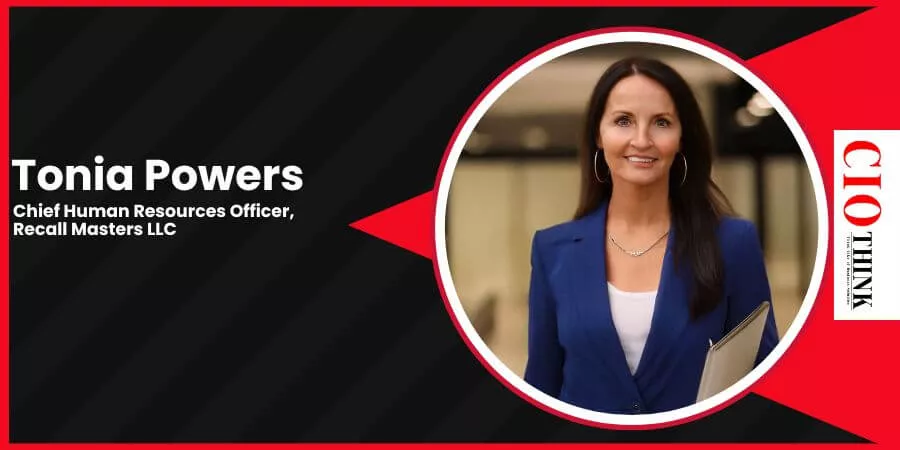
In a rapidly changing, high-expectation, and increasingly complex business world, the true differentiator is no longer technology or strategy alone, it is people. Behind the organizations that successfully grow, adapt, and endure are leaders quietly designing the systems, cultures, and leadership practices that enable sustainable excellence.
Tonia Powers is one of those leaders.
Her influence lies not in visibility, but in the systems she designs, systems that determine whether organizations thrive or fracture under pressure.
With over two decades of experience in human resources, Tonia has shaped a professional philosophy that is simple in principle yet powerful in execution: support, trust, and accountability drive performance. Where clarity exists, momentum follows. Where trust is intentional, results compound.
For Tonia, people leadership has never been about policies or administration. It has always been about alignment, between business objectives and human capability, between leadership intent and employee experience, and between what organizations promise and what they consistently deliver.
This people-first lens has guided her career from its beginnings in 2001 through the evolution of Human Resources itself.
From Administration to Strategic Architecture
When Tonia entered the HR profession, the function was still largely viewed as compliance-driven—focused on paperwork, policy, and risk mitigation. Strategy lived elsewhere. Culture was discussed often, but rarely designed with intention.
Over time, HR changed. And Tonia evolved with it.
As organizations grew more complex, the cost of misalignment increased. HR moved from the margins to the center of business performance. Tonia expanded her scope accordingly, stepping into roles that demanded not just operational excellence, but strategic vision.
For her, HR is not reactive.
It is anticipatory.
It means understanding what typically breaks as companies scale, where leadership capacity strains, where talent gaps emerge, and where misalignment becomes enterprise risk long before it appears in metrics.
Her work centers on building what she describes as social technologies, systems that scale human connection and performance, that flex under pressure without breaking.
One of the most defining moments of her career came when she led the unification of multiple organizations onto a single HR platform. While the initiative appeared technical on the surface, its real complexity was cultural.
Aligning systems was straightforward.
Aligning trust, transparency, and shared purpose was not.
That experience reinforced a belief that continues to guide her leadership today: change becomes sustainable only when people understand the destination and feel empowered in the journey. Impactful change is not dictated, it is designed through clarity and integrity.
Strategic HR in Action at Recall Masters
Today, as Chief Human Resources Officer at Recall Masters LLC, Tonia aligns people strategy directly with mission and accountability.
Recall Masters operates with a clear and socially significant purpose: protecting drivers and passengers from the dangers of unrepaired automobile recalls. It is complex, operationally demanding work, and HR, in Tonia’s view, plays a critical role in translating that mission into daily behavior.
For her, strategic HR planning is not theoretical.
It is practical architecture.
It means aligning workforce capability with operational reality.
Developing leadership capacity before growth exposes weaknesses.
Designing cultures that support performance rather than undermine it.
At Recall Masters, Tonia has demonstrated the power of consistency—between expectations and execution, leadership messaging and employee experience. Talent attraction and retention, she believes, are not driven by perks or slogans. They are earned through reliability.
Clear expectations.
Visible accountability.
An employee experience that matches what is promised.
Under her leadership, HR initiatives have strengthened organizational capability and culture, work recognized by executive leadership as critical to the company’s ability to attract, retain, and develop talent in a highly competitive labor market.
HR as the Architecture of Trust
One of Tonia’s defining beliefs is that trust is not an abstract value, it is a system.
Trust is built when roles are clear.
When feedback is timely and honest.
When leaders are held to the same standards as their teams.
She challenges traditional notions of engagement, rejecting superficial solutions. In her view, disengagement is rarely about motivation alone—it is often a signal of weak leadership, misaligned systems, or broken feedback loops.
HR’s role, she asserts, is to create environments where trust can scale.
This requires courage, closing leadership gaps, investing in manager capability, and enforcing accountability at every level. It also requires deep business fluency: understanding customers, financial pressures, and operational realities so that people strategy is grounded in truth, not idealism.
The Workplace of Tomorrow
Looking toward 2026 and beyond, Tonia believes the most successful workplaces will be shaped by three forces:
Agility. Clarity. Trust.
Agility enables adaptation.
Clarity ensures people understand what matters and why.
Trust allows execution without friction.
Employee experience, she notes, is no longer about perks. It is about systems, career pathways, feedback rhythms, leadership development, and tools that remove friction rather than create it.
Transparency, growth opportunity, and leadership integrity are no longer differentiators.
They are expectations.
At its best, HR becomes the backbone of resilience and innovation, hiring for learning agility, developing leaders capable of navigating complexity, aligning incentives with values, and creating psychological safety so people can fully engage.
HR, when done well, is the invisible architecture of sustainable performance.
Women in HR: Influence with Impact
As a woman in senior HR leadership, Tonia brings a perspective shaped by both strategic responsibility and lived experience. She understands how executive decisions translate into daily employee realities and ensures that connection is never lost.
Historically, women in HR have had to fight to be seen as strategic leaders rather than support functions. That narrative is changing as organizations increasingly recognize culture, retention, and leadership capability as competitive advantage.
Tonia actively mentors emerging women leaders, offering clarity, confidence, and context. She creates stretch opportunities, builds decision-making capability, and advocates through visibility and trust.
Her advice to aspiring women leaders is clear: know the business. Understand the numbers. Know the customer. Speak the language of strategy. Then let people expertise amplify the impact.
A Legacy of Strength and Care
What brings Tonia the greatest fulfillment is not metrics alone, but watching people and teams grow, especially through change.
For her, confidence, clarity, and belief are the truest measures of success. Performance follows naturally when people feel valued, empowered, and connected to purpose.
She does not define legacy by titles or accolades, but by the systems she leaves behind, systems where accountability and care coexist, leadership is predictable, and culture supports excellence.
If organizations are more resilient, more connected, and more future-ready because of the foundations she helped design, then her work has achieved its purpose.
And in an era where work itself is being redefined, Tonia Powers stands as a reminder that the future of organizations will be shaped less by what they engineer and more by how they lead their people.