
Redefining Access, Leadership, and What It Means to Break Barriers in Education
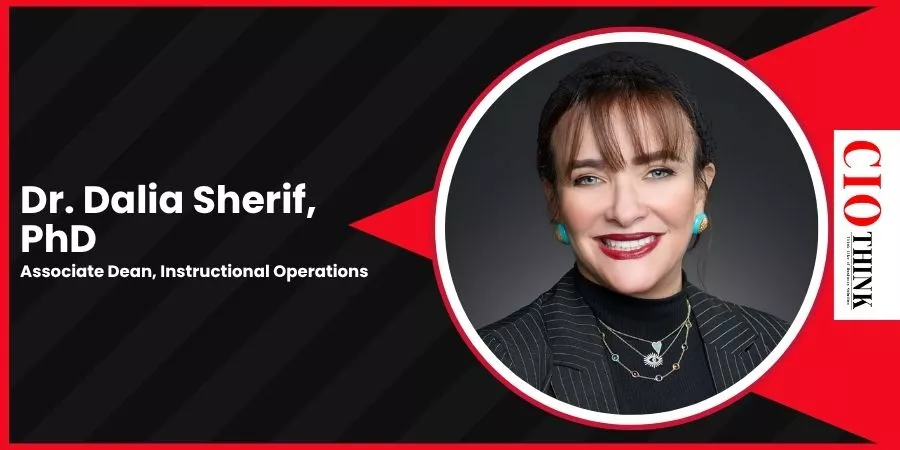
For years, Dr. Dalia Sherif believed she was building several different careers at once. She worked in international trade with the U.S. Department of Commerce, collaborated on educational exchange with the U.S. Department of State, built university partnerships, developed workforce programs, taught students, and eventually rose into executive leadership in higher education. It was only when she stepped back that she recognized the common thread had never actually changed.
At the heart of every role was the same commitment: helping people and organizations move from where they are to where they are capable of becoming. Whether she was helping an American company enter a global market, creating new academic pathways, building industry partnerships, or coaching someone through a career transition, her titles changed, but her purpose never did. Today, she describes life coaching, leadership, and higher education as simply different expressions of the same calling, different ways of helping people discover possibilities they cannot yet see for themselves.
“Whether I was helping an American company enter a global market, creating new academic pathways, building industry partnerships, or coaching someone through a career transition, I was helping people and organizations move from where they are to where they are capable of becoming.”
Where Knowledge Meets Wisdom
That calling rests on a rigorous, hard-earned foundation. Sherif holds a PhD in Industrial and Organizational Psychology, an MBA, and postgraduate certificates from Edinburgh Business School and Harvard Business School Online. She describes formal education as the source of her frameworks, the knowledge that explains how organizations function, how people make decisions, and how leadership influences behavior. Real-world experience, she says, taught her everything that happens once those frameworks meet real people.
No classroom, she points out, teaches someone how to lead through uncertainty, comfort a team during organizational change, navigate office politics, prioritize goals with limited resources, or make difficult decisions when every option carries real consequences. Those lessons come only from living them. It is a distinction she returns to often in her coaching work: education gave her knowledge, experience gave her wisdom, and she believes the most effective leaders need both in equal measure.
That combination of formal recognition and lived credibility has followed her throughout her career. She has been honored by both the U.S. Department of State and the U.S. Department of Commerce, named a Houston Business Journal Woman to Watch, and named a Global Leadership World Affairs Council Honoree. Of all of them, the Houston Business Journal recognition landed the most personally. It recognized not only what she had accomplished, but how she accomplished it, reflecting years of building programs that expanded educational access, forging partnerships that transformed institutions, and helping students who were often overlooked succeed. As an immigrant woman leading in rooms where she was frequently the only person who looked like her, the honor affirmed something she had long believed, that authenticity and excellence were never mutually exclusive, and that leadership could be expanded rather than merely entered.
Breaking the Perfectionism Trap
Much of Sherif’s coaching work today is aimed at a barrier she believes the education system itself helped create. Many women, she has found, graduate believing they must be completely prepared before raising their hand for the next opportunity, a habit rewarded by a system built around getting the right answer, avoiding mistakes, and waiting until you feel fully qualified. Leadership, she argues, simply does not work that way. The leaders who create meaningful change are comfortable learning publicly, asking difficult questions, and growing before they feel ready, treating failure not as a threat but as a natural part of growth that hands you the tools to do better the next time.
That same instinct shapes how she works with clients navigating major career transitions. Her first move is always to help them separate fear from fact, since uncertainty so often convinces people that their assumptions are reality. Together, she and her clients identify what is actually true, what is simply fear, and what opportunities become visible once the two are pulled apart. Clarity, in her framework, creates confidence, and once people can clearly see their strengths, values, and possibilities, they begin making decisions rooted in purpose rather than anxiety. From there, she helps them identify the one weakness or barrier quietly derailing their progress and builds a clear, actionable roadmap to close the gap between where they are and where they want to be.
She also sees identity, more than skill, as what most often separates high achievers from their next level. Many accomplished professionals continue operating from an outdated version of themselves, having already outgrown the role, the organization, or even the dream that originally motivated them, while their sense of self has not yet caught up with their own growth. Reaching the next level, she believes, is rarely about acquiring more skills. It is about developing the courage to think bigger than your previous success.
“Confidence usually follows action, not the other way around.”
Designing Education Around Belonging
For Sherif, breaking barriers in 2026 extends well beyond access. It is about belonging, representation, and reimagining who gets to lead. The next frontier, in her view, is ensuring students don’t merely enter higher education but thrive within it, graduate, and go on to become leaders themselves, which requires designing systems around student success instead of expecting students to adapt to systems that were never built for them. Meet them where they are, she insists, rather than expecting them to reshape themselves to fit the systems institutions created.
That vision includes leaders who reflect the diversity of the communities they serve, affordable pathways connected to real workforce opportunities, and technology deployed to increase equity rather than widen existing gaps. She is a firm advocate for embracing AI in education, not as a replacement for learning but as a tool to enhance it, equipping students with the AI skills and competencies employers increasingly expect. She also points to virtual and extended reality as tools institutions should be leveraging now, to create immersive, experiential learning environments that better prepare students for the modern workforce. At the same time, she believes institutions must be willing to redefine what success even means, measuring student outcomes, workforce readiness, and lifelong opportunity rather than graduation numbers alone.
She draws a sharp distinction between students who graduate prepared and those who graduate truly ready. Prepared students possess knowledge. Ready graduates know how to apply it, communicating effectively, collaborating across differences, solving complex problems, adapting to change, and continuing to learn long after the diploma is in hand. That gap exists, she explains, because success in today’s workforce depends as much on human skills as technical ones, which means higher education must intentionally develop resilience, emotional and cultural intelligence, critical reasoning, leadership, and adaptability alongside academic excellence. Knowledge opens the door. Character and capability determine how far someone actually walks through it.
Leading Across Cultures
Sherif’s years working across cultures taught her there is rarely only one correct way to solve a problem. Drawing on Erin Meyer’s The Culture Map, she notes that behaviors people often assume are universal are frequently cultural instead, a realization that taught her to approach differences with curiosity rather than judgment, asking not only what the right answer is, but what she might be missing because of the lens through which she learned to see the world. Every culture, she has found, defines leadership differently, from communication style to how decisions get made to what actually motivates people, and leadership begins the moment someone becomes curious enough to step outside their own frame of reference.
Central to that philosophy is a concept she returns to often with her mentees: intellectual humility, the ability to recognize that expertise does not mean having all the answers. Being a subject-matter expert, she believes, should never cause someone to shut down ideas that challenge what they already know. In fact, the more experienced a person becomes, the more intentional they should be about staying curious, because a colleague, a younger team member, or even a student may surface an approach that produces better results than years of accumulated experience ever could. Leadership, in her framing, is not about being the smartest person in the room. It is about building a room where everyone is encouraged to contribute what they know.
That same clarity extends to how she evaluates organizations. She frequently finds that companies confident in their own culture of learning are actually mistaking activity for learning, investing heavily in professional development, conferences, and training without ever building the systems that turn that learning into changed behavior. Real learning, in her view, shows up in daily decisions, improved collaboration, innovation, and measurable outcomes, and organizations only grow when reflection, accountability, and continuous improvement become part of everyday culture rather than occasional events on a calendar.
“Leadership is not about being the smartest person in the room; it is about creating a room where everyone is encouraged to contribute what they know.”
The Psychology of Sustainable Change
Sherif’s academic training in Industrial and Organizational Psychology gave her a perspective she believes most coaching methodologies miss entirely: people do not change through motivation alone. Behavior, she has learned, is shaped by systems, environments, incentives, identity, relationships, and organizational culture, not by mindset in isolation. Many coaching models focus primarily on mindset, and while mindset matters, she believes sustainable transformation only happens when behaviors, environments, and accountability move together, a scientific grounding that allows her to build lasting support rather than temporary inspiration.
That understanding also reframed how she views struggle itself. Growth, she has come to believe, is not only an individual responsibility. Sometimes people aren’t failing because they lack discipline or ambition, but because they are operating inside unclear systems, conflicting expectations, or environments that were never designed to support their success. Effective leadership, in that light, requires looking beyond the individual entirely, asking what barriers are built into a person’s system, what pieces are actually missing for them to grow, and what impact they genuinely want to have. Leadership is not simply about inspiring people. It is about creating the conditions in which people can thrive, setting clear goals, building trust, aligning roles with strengths, giving meaningful feedback, and celebrating progress along the way, because an inspiring message delivered inside a contradictory system will never produce lasting change.
Breaking Barriers That Were Never Truly Hers
Sherif’s own story is itself a case study in the barriers she now helps others break. She points to psychology’s Pygmalion Effect, and its counterpart in education, the Rosenthal Effect, as proof of just how powerful other people’s expectations can become, shaping outcomes long before a person ever gets the chance to prove otherwise. But she also learned, through direct experience, that expectations do not have to become destiny.
She was told she shouldn’t focus on STEM, and excelled in it anyway. She was told she would never graduate, and graduated magna cum laude. She was told she could never build a successful career while also being a good mother, yet she carried her children to a new country with almost no resources, built her career, continued her education, and raised them to be kind, successful professionals. Throughout her career, she has often entered spaces where she stood out, whether because of her background, her accent, her culture, or her perspective, and rather than letting those differences become obstacles, she deliberately learned to make them strengths.
She credits her parents for teaching her the value of education, resilience, and integrity, her mentors for opening doors and challenging her to think bigger, and her students for continually reminding her why leadership matters in the first place. Every opportunity she received, she says, came with a responsibility attached: to create opportunities for someone else. Success, in her view, is never an individual achievement. It is built on the courage of the people who believed in us before we fully believed in ourselves.
That debt shapes the principle she now carries into every classroom, boardroom, and coaching session she enters. A teacher, leader, parent, or mentor may say something in a single moment that another person carries for a lifetime, and she refuses to be the voice that tells someone what they cannot become. She wants, instead, to be the voice that helps people see possibilities they may not yet be able to see for themselves. Breaking barriers, for her, was never about proving anyone wrong. It is about refusing to let someone else’s expectations become the ceiling on her own potential, and helping the people she leads and coaches do exactly the same.
Her message to the next generation of women is direct and unhurried. Worth, she insists, is never determined by title, salary, or resume, since those things change many times across a life, while who a person becomes matters infinitely more than what they achieve. Invest in character as intentionally as you invest in career. Stay curious. Keep learning. Lead with courage. Build relationships. Lift others as you climb. And remember, she adds, that money can buy the image of success, a car, a house, any material marker, but it cannot buy intellectual growth, earned knowledge, developed wisdom, or mastered skill. Those things are built through time, effort, discipline, and perseverance, and once built, they belong to a person in a way nothing purchased ever can. Above all, she wants young women to stop waiting for permission to pursue the life they know they were created to build, because the barriers that feel permanent today so often become tomorrow’s foundation, for anyone willing to keep moving forward.
“Breaking barriers, for me, is not about proving people wrong. It is about refusing to let someone else’s expectations become the ceiling on my potential, and helping others do the same.”