

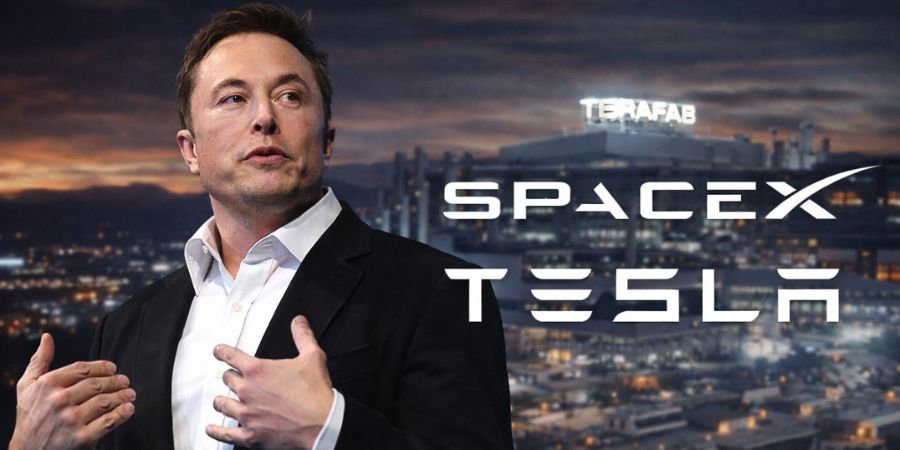
lon Musk Reveals Terafab AI Chip Plant in Bold Tech Move
Elon Musk announced a major industrial technology initiative: the launch of a massive “Terafab” AI chip manufacturing plant in Austin, Texas. The facility is designed to produce advanced, space-hardened chips tailored for the growing demands of Tesla and SpaceX, marking a significant shift toward vertical integration in semiconductor production.
The announcement has quickly become a top-trending topic in industrial tech, as Musk revealed that current global chip production meets only a “fraction” of his companies’ needs—especially as both firms scale up robotics and satellite deployments.
Why Elon Musk’s Terafab Announcement Is Trending
The Terafab chip plant announcement is gaining traction due to its potential to disrupt the global semiconductor landscape. Musk emphasized that relying on third-party chip manufacturers is no longer viable for the future ambitions of Tesla and SpaceX.
With Tesla advancing humanoid robots and autonomous driving systems, and SpaceX expanding satellite constellations, the demand for highly specialized AI chips has surged. Musk’s claim that global chip supply is insufficient underscores a broader industry bottleneck, making this move both strategic and necessary.
The Vision Behind “Space-Hardened” AI Chips
A key highlight of Musk’s announcement is the development of “space-hardened” AI chips—processors specifically designed to withstand extreme conditions such as radiation, temperature fluctuations, and vacuum environments.
These chips will play a crucial role in powering SpaceX’s satellites and deep-space missions, while also enhancing Tesla’s robotics and AI capabilities on Earth. By manufacturing these chips in-house, Musk aims to ensure reliability, scalability, and performance that standard commercial chips cannot provide.
Austin Emerges as a Tech Manufacturing Hub
The decision to establish the Terafab plant in Austin, Texas, further cements the city’s growing reputation as a technology and manufacturing hub. Tesla already operates a Gigafactory in the region, making Austin a strategic location for expanding production capabilities.
This move is expected to create jobs, attract investment, and strengthen the U.S. position in semiconductor innovation—especially at a time when global chip supply chains remain under pressure.
What This Means for the Future of Industrial Tech
Musk’s Terafab initiative signals a broader trend toward self-reliance in critical technologies. As companies increasingly integrate hardware and software development, the ability to control chip production could become a defining competitive advantage.
The announcement also raises questions about how traditional semiconductor companies will respond, and whether other tech giants will follow suit in building dedicated chip manufacturing ecosystems.
Looking ahead, the success of the Terafab plant could redefine how advanced technologies—from autonomous vehicles to space exploration—are powered, potentially ushering in a new era of vertically integrated innovation.
Also Read: Michael Saylor’s Digital Credit Strategy Drives Bitcoin Surge