

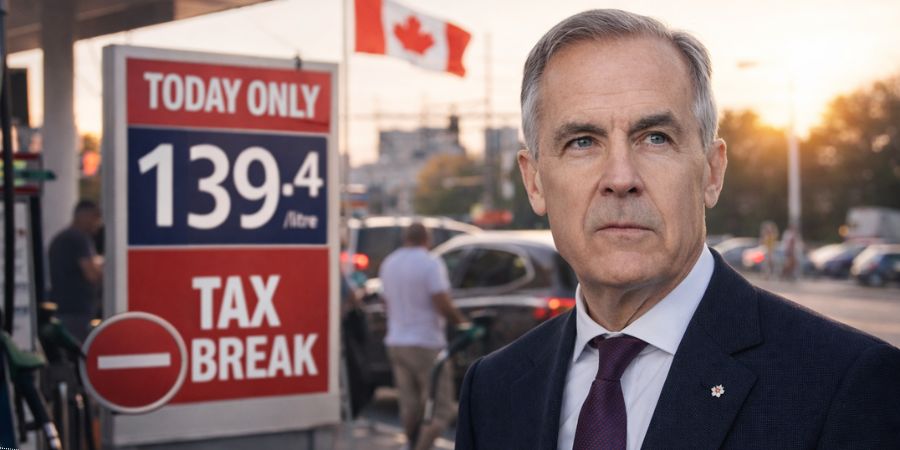
Mark Carney has announced a temporary suspension of the federal fuel excise tax starting April 20, a move expected to reduce gasoline prices by approximately 10 cents per litre for regular fuel. The decision marks a significant early economic policy shift aimed at addressing rising living costs across Canada.
The announcement comes at a time when Canadians continue to face persistent inflation and fluctuating global oil prices. The mark carney gas tax cut is being positioned as a direct intervention to provide immediate financial relief to households and businesses.
A Strategic Response to Rising Inflation
The mark carney gas tax cut is part of a broader strategy to combat inflationary pressures that have strained consumer spending in recent months. Fuel prices, which influence transportation and supply chain costs, have been a key driver of overall price increases.
By suspending the excise tax, the federal government aims to quickly lower operational costs for industries and reduce everyday expenses for citizens. Officials suggest that the policy could have a ripple effect, potentially stabilizing prices in sectors such as food and logistics.
Why the Policy Is Trending Now
This development is gaining widespread attention as it represents Mark Carney’s first major economic move since the most recent elections. Analysts view the mark carney gas tax cut as a signal of a more interventionist fiscal approach under his leadership.
Global oil market volatility has further amplified the urgency of such measures. With crude prices experiencing sharp fluctuations, governments worldwide are under pressure to shield consumers from sudden cost spikes. Carney’s decision aligns with similar temporary tax relief measures seen in other economies.
Economic Impact and Public Response
Early reactions to the mark carney gas tax cut have been mixed. Consumer groups and small business owners have largely welcomed the move, citing immediate savings and improved affordability.
However, some economists caution that the measure is temporary and could impact federal revenues if extended. They also note that while the tax cut provides short-term relief, structural solutions may be required to address long-term inflation challenges.
Despite these concerns, the policy is expected to deliver quick and visible benefits, which may strengthen public confidence in the government’s economic management.
What Comes Next?
The federal government has indicated that the suspension will be reviewed based on economic conditions and global energy trends. If inflation persists or oil prices remain unstable, further extensions or additional fiscal measures could be considered.
As Canada navigates ongoing economic uncertainty, the mark carney gas tax cut may serve as a defining early test of the new administration’s approach to balancing affordability with fiscal sustainability.
Also Read: Salman Rushdie to Keynote IAPP Global Summit 2026 on AI Speech