
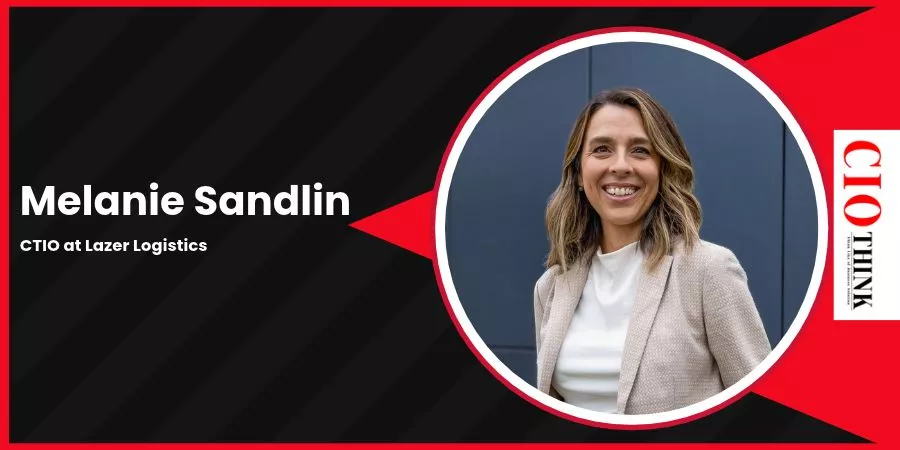
The Woman Who Sees the Whole Board
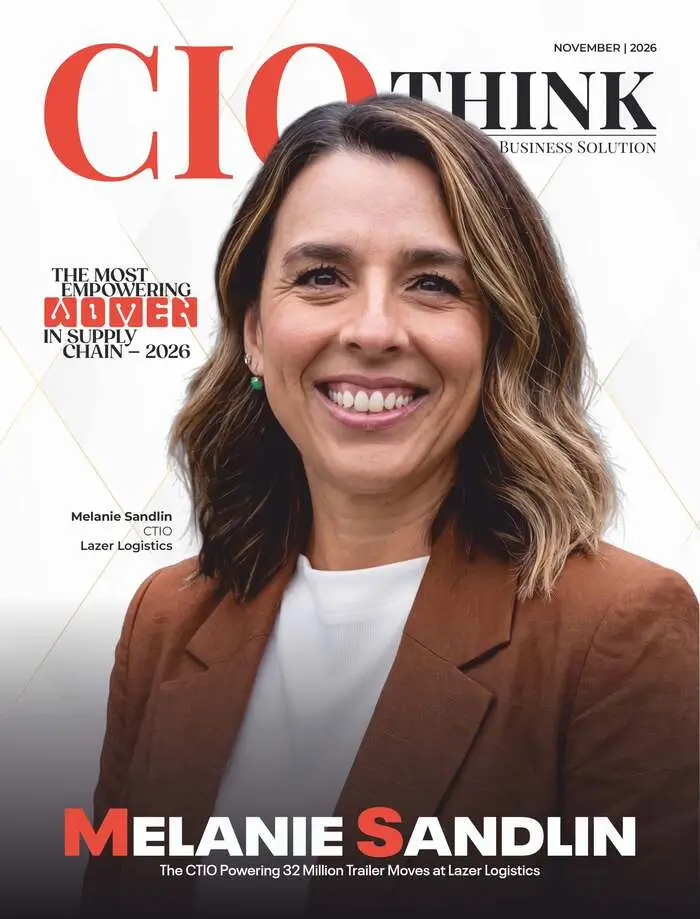
Most people see a logistics yard as a patch of asphalt where trailers come and go. Melanie Sandlin sees a system. She sees more than 800 sites, each with its own operational reality, and more than 32 million trailer moves a year that depend on the right information reaching the right person at the right moment.
After 27 years in technology, she still says she loves IT. It is an unusual thing to hear from an executive at her level, and she has a reason for it. IT gives you a vantage point that few other functions have. You can see across the whole business and around its corners, and you see the trade-offs nobody else has to deal with.
That vantage point has carried her through two decades of leading technology organizations across major manufacturing and logistics companies, through large-scale digital transformation at Cummins, and into a role that did not exist at Lazer Logistics until she arrived. She became the company’s first CIO in its 30-year history, built the IT function from the ground up, and now, as CTIO, leads enterprise IT, product management, software engineering, cybersecurity, and AI at the same time.
Yet ask her what matters most and the answer is never a platform or a metric. It is people, and whether they use what you build. That conviction, more than any single system, is why she has been named one of The Most Empowering Women in Supply Chain in 2026.
A Blessing and a Curse
Sandlin describes her chosen field with a candor that sets the tone for the rest of her story. Looking across the entire business is, in her words, both a blessing and a curse. The blessing is obvious: IT sees the whole board. It understands what cross-functional coordination actually takes, and how easy it is to move fast inside a single function’s silo.
The curse is quieter. Plenty of people would rather trade end-to-end optimization for speed in their own lane, and someone has to be the one who names what that trade-off actually costs. That role is not always a popular one. But she has learned that the unpopular perspective often gives leaders something they would never have considered on their own, and that is where much of the value sits.
It is the seat she wanted from the start: the one where you manage perspectives and trade-offs that nobody else is positioned to see. Instead of building inside someone else’s structure, she gravitated toward the work of connecting structures to one another.
Lessons From a Manufacturing Giant
Before Lazer Logistics, Sandlin drove major digital transformations at Cummins, a global manufacturing giant. The lesson she carried out of that experience was discipline: quality standards, functional excellence, and elite operational rigor, backed by the resources and runway that smaller environments rarely have. In a company of that size, you have the time and the budget to control the landing on a big initiative.
Lazer Logistics runs differently. There is no scale to absorb a miss, so everything matters, and she means everything. Carrying both instincts, the discipline of manufacturing and the urgency of a leaner environment, is what shapes how she builds today. She brings the rigor of a large enterprise to a company that has to move with the speed and focus of a much smaller one.
Building Something From Nothing
Becoming the first CIO of a company that had operated successfully for 30 years without one is not a typical assignment. There was no playbook to inherit and no existing function to improve. There was a business full of people who knew exactly how to run their yards, and a new technology leader who had to earn her place in that story.
She began by understanding the business deeply enough to fall in love with it, to see what makes Lazer special and to build that understanding into every decision her team makes. Her approach rests on respect for what people already do well. Many of Lazer’s operations rely on manual processes that people have built real muscle memory around, and she is not interested in asking anyone to give up something that works simply because a new technology exists. Her team starts with a different question: how can we make what they do better?
That thinking sits underneath the Enterprise Data Layer, which connects information that once sat isolated across functions and makes it more useful for decision-making. It is built with operators and for them, and Sandlin is unambiguous about the standard it has to meet.
Technology at the Scale of 800 Yards
At more than 800 sites, no two yards carry the same operational reality. The answer her team built is the Lazer Logistics Operating System, known as LLOS. It is the environment site managers use to bring together the information and workflows needed to run a yard, from fleet and safety to labor and yard execution. It processes more than 300 million data points a day across more than 3,000 connected trucks and supports the 32 million trailer moves Lazer handles every year.
Getting there was not glamorous. It meant rolling out tablets and solving connectivity with satellite at the most remote sites. It meant doing the unglamorous work at scale, one yard at a time. But she is careful about what standardization is meant to achieve.
“Standardizing the tools and data does not mean making every yard look the same.”
It means giving every site manager better visibility and a consistent operating foundation, then trusting them with the judgment that only they have for the yard in front of them. LLOS gives operators a common starting point while still allowing each of them to respond to the realities of their own customer operation.
One Filter for Competing Priorities
Leading enterprise IT, product management, software engineering, cybersecurity, and AI simultaneously means managing functions that each pull in a different direction. Sandlin does not try to eliminate that tension. She manages it by keeping one question at the center: what is best for the business?
Her discipline is bringing facts and data to every decision and making trade-offs visible instead of hidden. Every initiative is measured against the same five factors: top-line growth, efficiency gains, cost savings, reduced enterprise risk, and competitive advantage. The test is never whether a technology is new, but whether it helps teams and customers operate better. The filter only works if the team is honest about what it costs to say yes to one thing and no to another. Her job, as she sees it, is to make those costs visible so resources go behind the work that creates the most value for the business and its customers.
Transforming a Company Without Stopping It
Lazer Logistics grew from a yard spotting company into a full-service logistics partner, which means her team builds technology for a company in the middle of its own evolution. There is no luxury of slowing the business down while the foundation is rebuilt underneath it.
She borrows a concept from software engineering for this challenge, the strangler fig pattern, in which a new system is built around the old one piece by piece until it can replace it. That is essentially how Lazer approaches transformation: modernizing the operation without asking the operation to stop.
The harder discipline, she says, is deciding what is actually worth the team’s time. Her team saves its best effort for the processes that most directly affect how people run the yard and how customers experience the operation. Everything they touch should be better than they found it, but transformation only creates value when the business can adopt it and keep moving. For her, adoption is a requirement, not an afterthought.
From CIO to CTIO
Her move from CIO to CTIO added a second responsibility to the first. IT ownership means making sure the business can run, that the capabilities its functions and operations need exist, work, and scale. Product technology ownership adds the task of taking what Lazer has learned from operating yards at scale and finding where technology can solve problems beyond the company’s own walls.
What excites her about that is that Lazer is not building technology in isolation and then searching for a problem to apply it to. The company operates complex yards every day. It sees where visibility breaks down, where processes create friction, and where better information can help an operator make a stronger decision. That operating experience gives her team a practical foundation for building technology that creates value first for Lazer’s own teams, and ultimately for its customers.
The Team Came First
Ask Sandlin what she built first at Lazer and the answer is not a system. It is the team. She wanted people who walked into the company and saw opportunity everywhere, problem solvers who wanted to make things better and learn from the 30 years of operating experience already there.
She wanted people who would leave their fingerprints on the place while understanding that what already made Lazer successful had to be preserved, not replaced. Only after that did the strong data foundation come together, and she credits the team’s curiosity and respect for the business as the reason it worked. Technology transformation, in her view, starts with people who understand the problem they are trying to solve.
Securing the Edge
Cybersecurity in a network of more than 800 sites presents its own challenges, and Sandlin has a clear view of where the industry is most exposed.
Every tablet in a truck cab, every camera, and every telematics feed adds another endpoint to an operation that is distributed, hands-on, and increasingly connected. Most traditional security models were built around an office footprint, but a logistics business has to be secured from the edge. That means protecting not only corporate systems but also the devices and technology operating across trucks and physical sites.
She treats cybersecurity as an operational discipline, built into how sites and connected assets actually run rather than bolted on afterward. Done well, protection supports resilience without slowing essential work, and as more technology enters the physical work environment, it helps protect employees as well.
AI in the Yard
When Sandlin talks about artificial intelligence, she keeps the conversation grounded in results. Some of the most immediate value, she says, comes from turning the operational data Lazer already has into earlier and more useful action. Connected fleet, maintenance, and yard data can help teams spot developing issues sooner, while there is still time to act. Lazer’s fleet management capabilities are bending the maintenance and repair cost curve, reducing spend by 7 percent across sites and returning millions in annual savings by helping catch problems earlier.
The larger opportunity is making 30 years of operating knowledge more accessible to the people who make decisions every day. That is the idea behind Uncle Phil AI, the AI coaching intelligence embedded inside LLOS. It is modeled on the operating philosophy of Lazer’s COO, Phil Newsome, and helps site managers turn connected information into actionable guidance in the moment.
Her view of AI is consistent with everything else she builds. It is not a replacement for the operator, and it is not technology for technology’s sake. Its value comes from helping good people see issues earlier, make better decisions, and execute more consistently. If people do not adopt it and use it in the operation, she says, it does not create value.
What Empowerment Really Means
Sandlin’s recognition as one of The Most Empowering Women in Supply Chain in 2026 comes from the way she leads, not from a title. In her definition, empowerment starts with giving people the opportunity to make a real impact. At Lazer, she says, you can walk in and contribute within days, not months. The stakes are high, but the opportunity is just as rich for anyone motivated by making a difference rather than by the size of a team or the words on a business card.
She is equally clear that empowerment is not only about what she gets to do. It is about creating that opportunity for other people: spotting someone with potential, giving them room to stretch, and supporting them as they take on something bigger. The best part of her job is building something that gives someone time back, makes their work easier, or helps a member of her team realize they are capable of more than they thought.
“To me, that is empowerment: creating value, developing people and then giving them the confidence and opportunity to do the same for someone else.”
Doing the Work Until It Noticed
Sandlin has spent much of her career in technical leadership in environments where women in her role were rare. When asked what she had to build within herself to lead at that level, her answer is modest and direct. For most of her career, she did not think about it. She focused on holding her own and trusted that she could see things others could not and connect dots others were not connecting.
What she built was confidence, through relationships, through practice, and through failing at things and trying again until she got better at them. She credits incredible mentors, men and women both, people she could confide in as she worked out how to show up the way she wanted to. The recognition came later, once she became known for the work itself and the impact it had.
Growing People From the Inside
Her belief in developing people is built into a simple habit. For every open role, her first question is who inside could be stretched into it, not who can be backfilled on paper. She does not automatically refill a role as it existed before. Her team looks at what the business needs now and who has earned the chance to grow into it.
Jeremy Teeters is the clearest example. A longtime Lazer employee, he rose into a much bigger version of his role as IT became a true function. For Sandlin, it reflects Lazer’s belief in people applied to how a team is built: invest in what someone could become, not just what they already are.
The Legacy She Is Building
Looking ahead, Sandlin knows what she hopes people will say. She wants them to say that her team found a way to bottle up everything that made Lazer the best company in its space and then scaled it, so that Lazer’s people had better tools, showed up more engaged, and had more fun doing their jobs and serving customers. She wants them to say she brought in great people and got them to bring their best time and talent to genuinely interesting problems.
Most of all, she wants them to say that as much as she loved the technology, she never lost sight of what it was for. Her philosophy is four steps long: plan, build, adopt, and run. The companies that adopt faster than everyone else, she says, get the value sooner.
For a leader who still says, after 27 years, that she loves IT, it is a fitting summary. The systems she builds will change, but the principle behind them will not. Technology matters when it makes people’s work better, and empowerment is what happens when you hand that opportunity to someone else.