

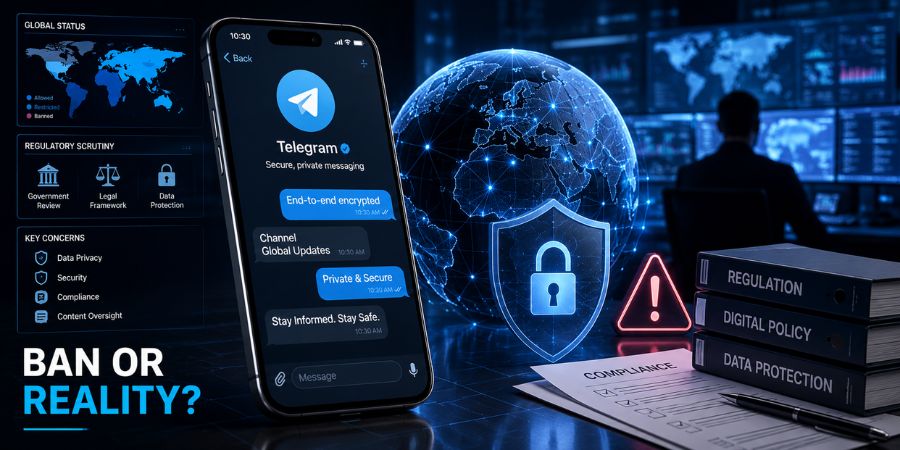
What the Telegram Ban Update Really Means
The phrase Telegram Update has recently become widely searched due to growing concerns about government restrictions, content moderation debates, and misinformation risks on encrypted messaging platforms. As of verified public records and reporting from established international news organizations and regulatory statements up to recent years, there is no global ban on Telegram, but the platform continues to face selective restrictions, legal scrutiny, and temporary blocks in certain countries depending on national security and regulatory policies.
The Telegram Update conversation is therefore not about a single worldwide action, but rather a patchwork of country-specific decisions shaped by privacy laws, encryption debates, and platform governance concerns. Telegram remains operational in most countries, including India, but its availability and features can vary depending on local regulations.
Telegram Update: Global Regulatory Landscape and Current Status
Globally, Telegram operates as one of the most widely used encrypted messaging platforms, alongside WhatsApp and Signal. Governments do not treat it uniformly, and regulatory responses differ significantly.
In democratic regions such as the European Union, the platform is generally accessible, though it is subject to broader digital laws like the Digital Services Act (DSA), which requires platforms to address illegal content and cooperate with authorities when legally requested.
In countries with stricter internet governance models, Telegram has faced intermittent restrictions or full blocks. These actions are typically linked to concerns around:
- Unmoderated public channels
- Use in political mobilization
- Distribution of illegal or extremist content
- Encryption limiting surveillance capabilities
Despite these pressures, Telegram continues to expand its global user base, often restoring access after negotiations or policy adjustments. The evolving Telegram Update landscape shows that enforcement is inconsistent and highly dependent on national policy priorities.
Historical Context Behind Platform Restrictions
Understanding the current Telegram Update requires looking at how messaging platforms have historically been regulated.
Encrypted messaging apps have long been at the center of debates between privacy advocates and governments. Since the mid-2010s, Telegram has been viewed as both a privacy tool and a potential risk channel depending on the jurisdiction.
Key historical points include:
- Some governments have previously attempted full or partial blocking of encrypted apps during political unrest or security incidents
- Courts in certain regions have reviewed whether platforms must provide access to encrypted data
- Telegram has occasionally been removed from app stores in specific countries during disputes, later reinstated after compliance discussions
This pattern shows that restrictions are often temporary, reactive, and politically contextual rather than permanent global bans.
Countries Where Restrictions Have Been Reported
The Telegram Update narrative varies widely depending on geography.
In some countries, Telegram has faced temporary or ongoing limitations due to national security concerns or content control policies. These actions may include:
- Temporary blocking during protests or elections
- ISP-level restrictions on access
- App store removals followed by reinstatement
- Court-ordered compliance requests
However, it is important to note that in most cases, Telegram is not permanently banned globally. Instead, access tends to fluctuate based on regulatory disputes.
In countries like India, Telegram is generally accessible, but like all major platforms, it remains subject to legal compliance requirements under local IT and cybersecurity frameworks.
Why Governments Scrutinize Telegram
The ongoing Telegram Update discussion is largely driven by concerns that are not unique to Telegram but apply to encrypted platforms in general.
Governments typically raise concerns in several areas:
1. Encryption and Law Enforcement Challenges
End-to-end encryption and partial encryption models can make it difficult for authorities to access communication data during criminal investigations.
2. Content Moderation Issues
Large public channels can distribute misinformation, piracy content, or harmful material with limited moderation speed.
3. National Security Concerns
Some states argue that encrypted messaging apps can be used for coordination by extremist or illegal groups.
4. Data Compliance and Jurisdiction
Different countries require different levels of data localization and compliance, which can conflict with Telegram’s operational model.
These concerns do not necessarily lead to bans but often result in regulatory negotiations and compliance pressure.
The Technical and Legal Challenge of Banning Messaging Apps
A critical aspect of any Telegram Update discussion is understanding why banning a messaging app is technically complex.
Even when governments attempt restrictions, users often retain access through:
- VPN services
- Proxy servers
- Alternative DNS routing
- Mirror platforms or web versions
Additionally, Telegram’s distributed infrastructure and global server model make enforcement uneven.
From a legal perspective, blanket bans can also raise concerns about:
- Freedom of expression
- Digital rights compliance
- Economic impact on businesses using the platform
As a result, governments often prefer targeted restrictions rather than complete bans.
Impact on Users and Digital Communication
For users, the Telegram Update environment directly affects how they communicate, consume content, and access communities.
Telegram is widely used for:
- Public information channels
- Educational content distribution
- Community discussions
- Business communication groups
When restrictions occur, users may experience:
- Temporary inaccessibility of channels
- Reduced message delivery reliability
- Loss of access to specific regional content groups
However, in most regions, the core messaging functionality remains intact.
Security, Privacy, and Misinformation Concerns
One of the most debated aspects of the Telegram Update is the balance between privacy and safety.
Telegram offers features such as:
- Cloud-based messaging
- Secret chats with encryption
- Large public channels
- File sharing and bots
While these features enhance usability, they also create moderation challenges. Experts often highlight that the issue is not encryption itself, but scale and speed of content distribution.
At the same time, privacy advocates emphasize that encrypted messaging is essential for:
- Journalists
- Activists
- Businesses
- Everyday users concerned about data privacy
This duality is central to ongoing regulatory debates.
Expert Perspective on Regulation Trends
Digital policy analysts generally agree that the Telegram Update trend reflects a broader global shift toward tighter regulation of online platforms rather than isolated action against one app.
Key expert observations include:
- Governments are increasingly focusing on platform accountability rather than outright bans
- Enforcement is moving toward transparency requirements and content reporting systems
- Messaging apps are expected to implement stronger moderation tools without compromising core privacy features
This suggests that future regulation will likely be hybrid rather than prohibitive.
Future Outlook for Telegram and Global Access
Looking ahead, the Telegram Update landscape is expected to evolve in three main directions:
Increased Regulation, Not Elimination
Full global bans are unlikely; instead, targeted legal frameworks will continue to expand.
Platform Adaptation
Telegram may continue introducing moderation tools, transparency features, and compliance systems to meet regional requirements.
Continued Regional Variability
Access will likely remain inconsistent across countries, depending on political and legal environments.
Overall, Telegram is expected to remain a major global messaging platform, but under increasing regulatory oversight.
Final Perspective
The current Telegram Update narrative is best understood not as a single ban announcement, but as an ongoing global regulatory process. Telegram remains widely accessible, though subject to periodic restrictions and legal scrutiny in certain jurisdictions.
Rather than a universal shutdown, the reality is a fragmented regulatory environment shaped by privacy concerns, security debates, and national digital policies. Users and policymakers alike continue to navigate the balance between open communication and regulated digital ecosystems.
Frequently Asked Questions (FAQs)
1. Is Telegram banned globally in 2026?
No. There is no global ban on Telegram. The platform remains accessible in most countries, though some regions may impose temporary or partial restrictions based on local laws and security concerns.
2. Why does Telegram face government restrictions?
Governments often cite concerns such as misinformation, illegal content distribution, encryption challenges, and national security risks. These issues lead to regulatory scrutiny rather than universal bans.
3. Is Telegram available in India?
Yes. Telegram is currently available in India. However, it is subject to compliance with Indian IT laws and cybersecurity regulations, like other major digital platforms.
4. Can Telegram be permanently blocked in a country?
While technically possible, permanent blocking is difficult to enforce due to VPNs, proxy tools, and decentralized access methods. Most restrictions tend to be temporary or partial.
5. What makes Telegram different from other messaging apps?
Telegram supports large public channels, cloud-based messaging, and flexible content sharing. Its hybrid encryption model and open community structure differentiate it from many competitors.
6. What is the future of Telegram regulation?
The future is expected to involve stronger digital regulations rather than outright bans. Platforms like Telegram will likely adapt by increasing transparency and compliance with regional laws.
Also Read: Freelancing Tips to Build a Successful Career in 2026: A Practical Guide for Long-Term Growth